Beiträge von Albert Motorsport

    Porsche Engineering hat zwei Methoden der Künstlichen Intelligenz kombiniert, um einen Seitenschweller effizient zu optimieren: Ein Reinforcement-Learning-Agent findet die beste Variante des Bauteils – unterstützt von einem Neuronalen Netz, das die einzelnen Optimierungsschleifen stark beschleunigt.

    Quelle: https://newsroom.porsche.com/d…euronales-netz-27886.html

    Dear all,


    a customer whose engine we completely overhauled in 2017 complained about the heavy oil sludge that he currently found in his oil filler cap. The fear of renewed #engine damage to his #Porsche #997 #Carrera makes him visibly restless, so I'll write us a few lines about it here.


    What is that #sludge in the oil and where does this sludge in the oil cap come from?


    The oil sludge that often occurs in the oil filter cover of our Porsche is a result of the #blow #by #gases that also occur in a #Porsche #combustion engine.


    During the #combustion processes in the #workstrokes, gases of the #fuel #air mixture, consisting of #hydrocarbons, oil molecules, air and water, get past the #piston rings and into the #crankcase.


    Even with optimal #sealing of the #piston rings, 2% of the compressed, partly unburned gases escape into the inner #engine compartment, the crankcase. Ideally, it is around 0.5%.


    The following causes are known to us for the formation of oil sludge in the engine:


    The heat of the engine combined with the #oxygen in the air cause our oil to oxidize. The #combustion of #fuels forms acids and components that cannot be dissolved in the oil. As a result, this also leads to oil #sludge formation.


    The nitrogen compounds that are also produced during #combustion in the engines, the NOx'se, also pollute our oil in the engine. Most of the #NOx #compounds contained in the #exhaust gas flow out of the exhaust pipe, as listed above, but quite a number of them also get into the crankcase and thus into the #engine oil via the "blow-by" gas.


    This makes our #lubricant tough, often even black and can often cause engine damage through the formation of #black sludge. (I will write more about this)


    The main causes are:

    Frequent #short-distance drives that generate and fuel these #reactions,

    because the engine oil rarely reaches the required #operating temperature.


    The result is:

    The harmful components do not evaporate and the #oil sludge formation progresses continuously. The oil filter cover is the furthest from the #center of #heat, or at least the coolest spot on the engine block, so that's where this squishy oil sludge condenses, making our customers uncomfortable.


    There are the most adventurous remedies on the market for removing the mud or really great #ideas for flushing the #engines. Sure, you can do anything to get rid of the sludge, but in the long run it only helps to eliminate the #causes of #sludge formation.


    What should I do?

    • Adhere to the oil change intervals and use only #high-quality, #synthetic motor oil if possible!
    • Do not only drive #short distances where the engine does not reach a sufficient #operating temperature!
    • Every now and then let the Porsche fly on the #Autobahn so that the old dirt can evaporate and via the #crankcase ventilation, because that's what it's there for, it's sucked out and comes out where it should: "OVER THE EXHAUST" !


    Even better (my idea):

    Every now and then drive the Porsche on the racetrack!

    I swear, "None of our race cars have ever had oil sludge"!


    For questions about this

    I am very happy to answer this topic!


    Warm greetings

    Jurgen Albert

    master mechanic

    Was ist ein Öl - Wasser - Wärmetauscher und wie funktioniert er in einem Porsche ?


    Plattenwärmetauscher, so wie sie in unseren Porsche verbaut sind, zählen zur Gruppe der Ölkühler.


    Sie werden inzwischen in der gesamten Bandbreite der Porsche Serie, ob bei Porsche Sportwagen oder bei einrassigen Rennwagen mit absoluter Höchstleistung, seit vielen Jahren sehr erfolgreich eingesetzt.


    Die Hauptaufgabe eines solchen Wärmetauschers ist es, durch ein Plattensystem aus leitfähigem Aluminium, den Öl- und Wasserkreislauf voneinander zu trennen, aber Ihn auch gleichzeitig so nah zu verbinden, dass die differenten Medien den Wärmehaushalt untereinander austauschen und so sehr gut regulieren können.


    Je nach Anzahl und nach Größe der einzelnen, im Wärmetauscher-System verbauten Platten,
    wird die Heizleistung, aber auch die Kühlleistung beim Betrieb des Motors bei Vollast reguliert.


    Ein Plattenwärmetauscher wird deshalb in einem Porschemotor eingesetzt, weil dort ausreichend Kühlwasser zur Verfügung steht und weil die Ölkühlung durch Kühlwasser und Wärmetauscher die effizienteste Variante eines Ölkühlers an einem Porsche PKW ist.


    Bei neueren Porsche Fahrzeugen werden Öl - Wasser Wärmetaucher bei Motoren, aber auch bei Getrieben der GT-Varianten eingesetzt.


    Bei hochkarätigen Rennfahrzeugen sind die Wärmetauscher ca. doppelt so groß wie bei Serienfahrzeugen. Das ist deshalb so, weil die Temperaturdifferenzen von Öl zu Wasser im Betrieb wesentlich größer sind und durch den Wärmetauscher geregelt werden müssen.


    Das Kühlwasser wird im Kaltlauf schneller aufgeheizt als das Motoröl.

    Der Wärmetauscher sorgt dafür, dass das schneller warm werdende Kühlwasser das Öl deutlich schneller als ohne einen Wärmetauscher aufheizt. Bei Vollgas, in einem Rennwagen zum Beispiel, wird das Motoröl normalerweise wesentlich heisser als das Kühlwasser. Hier sorgt nun der Wärmetauscher wieder für einen sehr guten Wärmeausgleich der beiden Medien zueinander und für eine sehr gute Kühlung des Motoröls.


    Auch bei kurzzeitiger Höchstleistung, heizt sich das Motoröl besonders an den stark reibungsintensiven Stellen im Motor auf, wie zum Beispiel den Lagern und an den Kolben und Zylindern. Hier sorgt der Wärmetauscher für eine sehr gute Kühlung.


    In neueren Porschefahrzeugen wird auf den Einsatz eines Öltemperatur-Anzeigers verzichtet, weil beim Normalbetrieb der Fahrzeuge das Kühlwasser und das Motoröl nur einen gering differenten Temperaturunterschied haben.


    Bei Rückfragen antworte ich gern


    Jürgen Albert

    Kfz.-Meister

    Team Albert Motorsport

    Liebe Alle,


    ein Kunde, dessen Motor wir 2017 komplett überholt haben, reklamiert den starken Ölschlamm den er heute in seinem Öl - Einfüll - Deckel gefunden hat. Die Angst vor einem erneuten #Motorschaden an seinem #Porsche #997 #Carrera macht Ihn erkennbar unruhig, so dass ich uns hier ein paar Zeilen - auch zu seiner Beruhigung - dazu schreibe.


    Was ist das für ein Schlamm im Öl und woher kommt dieser Schlamm im Öldeckel ?


    Der Ölschlamm, der oft im Ölfilter- Deckel unserer Porsche auftritt, ist eine Folge der #Blow #by #Gase die auch in einem #Porsche #Verbrennungsmotor entstehen.


    Beim Ablauf der #Verbrennungsprozesse in den #Arbeitstakten, gelangen Gase der #Kraftstoff- #Luftmischung, bestehend aus #Kohlenwasserstoffen, Öl-Molekühlen, Luft und Wasser, an den #Kolbenringen vorbei, direkt ins #Kurbelgehäuse.


    Selbst bei optimaler #Abdichtung der #Kolbenringe entweichen bis zu 2% der komprimierten, teils unverbrannten Gase in den inneren #Motorraum, das Kurbelgehäuse. Im Idealfall sind es um die 0,5%.


    Für die Bildung des Öl-Schlamms im Motor sind mir folgende Ursachen bekannt:


    Die Wärme des Motors in Verbindung mit dem #Luft-Sauerstoff lassen unser Öl oxidieren. Durch die #Verbrennung von #Kraftstoffen, bilden sich Säuren und Bestandteile die im Öl nicht aufzulösen sind. Das führt in der Folge auch zur Öl- #Schlammbildung.


    Die bei der #Verbrennung in den Motoren ebenfalls entstehenden Stickstoffverbindungen, die NOx´se, belasten ebenfalls unser Öl im Motor.


    Der größte Teil der im #Abgas enthaltenen #NOx #Verbindungen strömt zwar aus dem Auspuff heraus, wie oben aufgeführt, jedoch kommen über die "Blow-By“-Gase etliche Mengen davon auch ins Kurbelgehäuse und damit in unser #Motoröl.


    Dadurch wird unser #Schmierstoff zäh, oftmals sogar schwarz und kann durch die Bildung von #Schwarz-Schlamm oft auch Motorschäden verursachen. ( Dazu werde ich uns noch was schreiben )


    Die Hauptursachen sind:

    Häufige #Kurzstreckenfahrten, die erzeugen und beflügeln diese #Reaktionen,
    denn das Motoröl erreicht nur selten die erforderliche #Betriebstemperatur um
    diese Kondensationen eben nicht stattfinden zu lassen.


    Das Ergebnis ist:
    Die schädlichen Bestandteile verdampfen nicht und die #Ölschlammbildung schreitet kontinuierlich voran. Der Ölfilterdeckel ist vom #Zentrum der #Hitze am weitesten entfernt, oder zumindest der kühlste Punkt des Motorblocks, daher kondensiert dort dieser matschige Öl - Schlamm und sorgt für Unbehagen bei unseren Kunden.


    Es gibt im Markt die abenteuerlichsten Mittelchen zur Beseitigung des Schlamms oder ganz tolle #Ideen zur Spülung der #Motoren. Klar, das kann man alles machen um den Schlamm zu beseitigen, aber auf Dauer hilft es nur die #Ursachen der #Schlammbildung zu beseitigen.


    Was ist zu tun?

    1. Die Öl-Wechselintervalle einhalten und möglichst nur #hochwertiges, synthetisches Motoröl verwenden!
    2. Nicht ausschließlich #Kurzstrecken fahren, bei denen der Motor nicht auf eine ausreichende #Betriebstemperatur kommt!
    3. Hin und wieder den Porsche auf der Autobahn "fliegen lassen", so dass der olle Schmodder verdampfen kann und über die #Kurbelgehäuse- Entlüftung, denn dafür ist die da, abgesaugt wird und da raus kommt wo es sollte: "ÜBER DEN AUSPUFF"!


    Noch besser ( meine Idee):
    Hin und wieder mal mit dem Porsche auf der Rennstrecke fahren !

    Ich schwöre: "Keiner unserer Rennwagen hatte jemals Ölschlamm"!


    Bei Rückfragen zu diesem Thema antworte ich sehr gern!


    Liebe Grüße

    Jürgen Albert

    Kfz.-Meister

    Porsche treibt seine Ambition bei der Entwicklung und Fertigung von Hochleistungsbatteriezellen weiter voran: Der Sportwagenhersteller erwirbt Anteile am US-amerikanischen Unternehmen Group14 Technologies, einem Hersteller von fortschrittlicher Silizium-Kohlenstoff-Technologie für Lithium-Ionen-Batterien.

    Quelle: https://newsroom.porsche.com/d…al-investition-28206.html

    The new 911 Sport Classic is the second of four collector's items that Porsche has presented from its Heritage Design strategy.


    The 911 Sport Classic is back, and this time it is coming to the U.S. market. Featuring the distinctive and purpose-driven ducktail spoiler that pays tribute to the 911 Carrera RS 2.7 of the early 1970s, production of the new iteration is limited to 1,250 examples worldwide.

    The new 911 Sport Classic is based on the 911 Turbo S, benefitting from its wide-body layout. Unlike the 911 Turbo models, the Sport Classic is available exclusively with a seven-speed manual transmission powering the rear wheels. Its engine, generating 543-hp and 442 lb.-ft. of torque, is the same 3.7-liter twin-turbo flat-six found in the 911 Turbo models with revised engine mapping to deliver output compatible with the manual transmission. That combination also makes this the most powerful 911 with a manual transmission currently available.
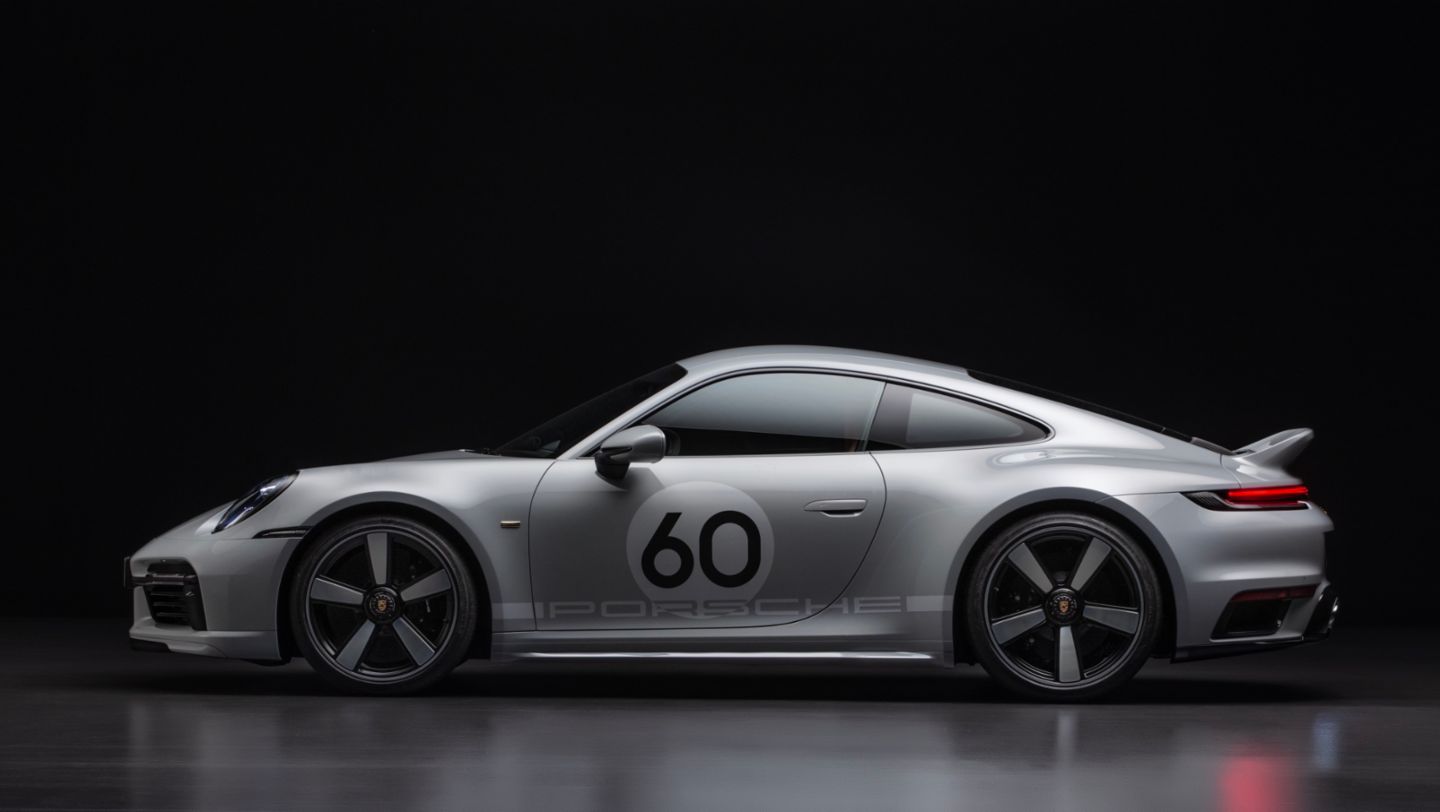


    Manual transmission, rear-wheel drive, and 543 hp

    The new 911 Sport Classic is based on the 911 Turbo S, benefitting from its wide-body layout. Unlike the 911 Turbo models, the Sport Classic is available exclusively with a seven-speed manual transmission powering the rear wheels. Its engine, generating 543-hp and 442 lb.-ft. of torque, is the same 3.7-liter twin-turbo flat-six found in the 911 Turbo models with revised engine mapping to deliver output compatible with the manual transmission. That combination also makes this the most powerful 911 with a manual transmission currently available.

    Because the new model is based on the 911 Turbo S, it too features a comprehensive list of high performance equipment. Porsche Ceramic Composite Brakes (PCCB) with calipers in black, Porsche Dynamic Chassis Control (PDCC), Rear Axle Steering, the Sport Chrono Package, and a specially modified Sport Exhaust system are all included as standard. Porsche Active Suspension Management (PASM) Sport is also standard and lowers the ride height by 10 millimeters. Due to the fact that this is a rear-wheel drive model, the front axle spring rates are slightly decreased by comparison to the all-wheel drive 911 Turbo S.

    Despite its undeniable sports car pedigree, the 911 Sport Classic is designed with driver enjoyment in mind and while it’s certainly up to the task of turning quick track laps, this limited-edition model emphasizes style and driving pleasure above all else.
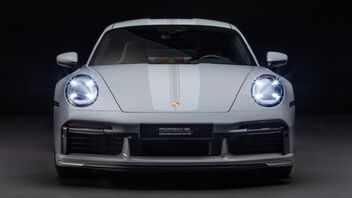
    Second Heritage Design Edition model as part of Heritage Design strategy

    This is the second in a series of four Heritage Design models where the 911 Targa 4S Heritage Design Edition was the first. The 911 Sport Classic shares certain design traits with that model including a heritage inspired Porsche crest nearly identical to the version from 1963, badges and PORSCHE lettering finished in real gold and special Exclusive Manufaktur badges on the front quarter panels. Finally, a Porsche Heritage badge fixed to the intake grille at the rear references the Porsche 356 badge that was awarded in the 1950s when a vehicle reached the 100,000 kilometer mark.


    A special twist on classic style

    Its striking body is based on the 911 Turbo, but with several elements that are unique including Sport Grey Metallic paint and painted contrasting stripes in light Sport Grey. Drawing inspiration from Fashion Grey, a color first applied to the Porsche 356, this color was created for the new 911 Sport Classic. Customers may also specify the 911 Sport Classic in Black (non-metallic), Agate Grey Metallic, or Gentian Blue Metallic.


    Many design elements of the new 911 Sport Classic are unique to the limited model. Starting with the front, a fixed spoiler lip and LED-Matrix Design headlights in Black contribute to its purposeful appearance. The carbon fiber reinforced plastic (CFRP) hood – not offered on the 911 Turbo models – dips in the center. That indentation complements a CFRP double-bubble roof that is also special to the model and a design continuance of the first 911 Sport Classic dating back to the Type-997 generation.
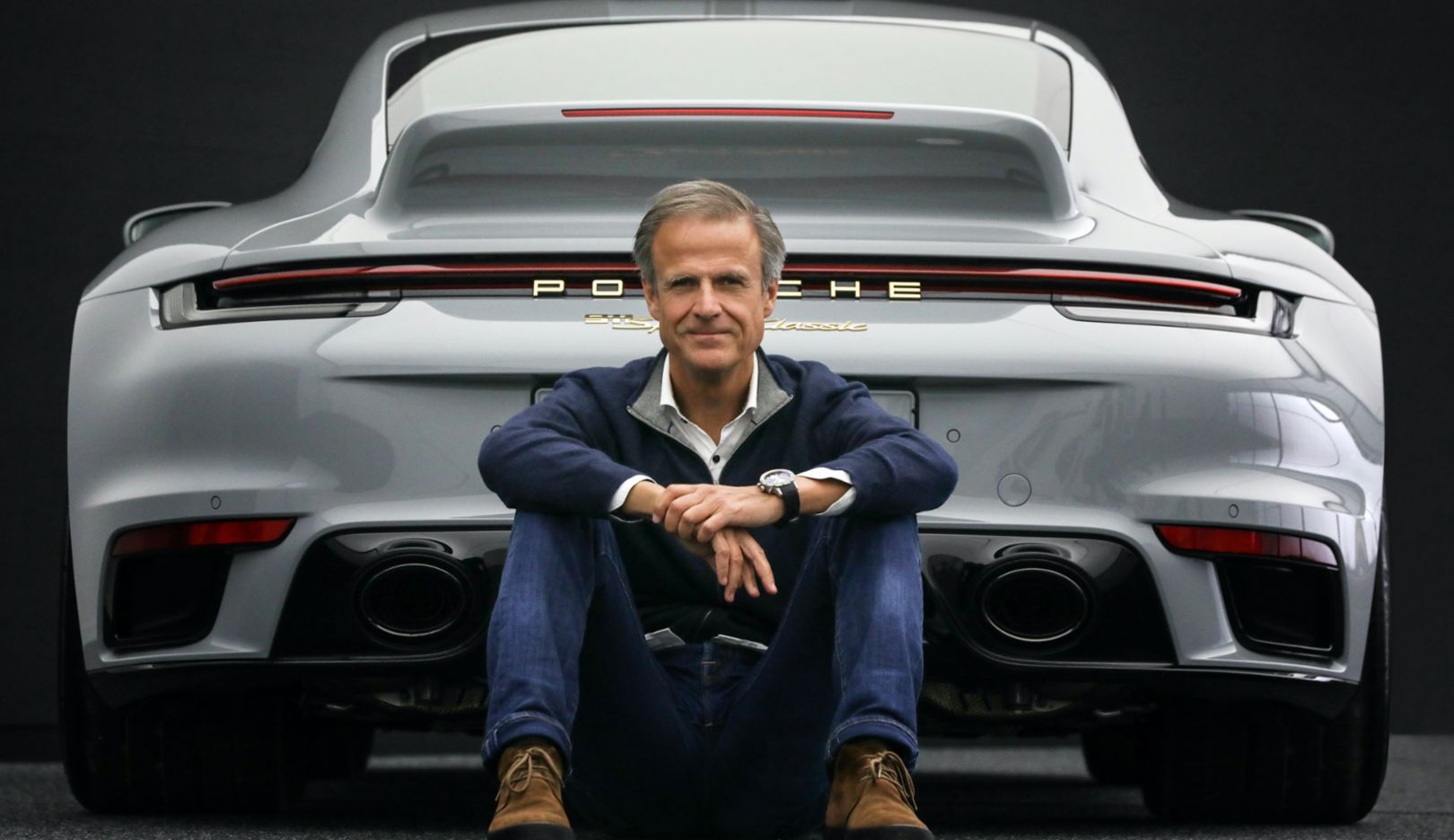


    Michael Mauer


    Graphics along the sides further distinguish the car. These include PORSCHE script and a white lollipop that customers can specify with digits between 1 and 99 at no additional cost. These are intentionally applied as decals rather than paint so they may be removed in the future should the owner prefer to do so.

    The 911 Sport Classic wheels, too, are special and unique to this car. As a modern re-interpretation of the Fuchs design, they are another nod to Porsche heritage. In this case, they use a center lock hub and measure 20 / 21 inches front and rear with tires measuring 255/35 ZR20 and 315/30 ZR21.


    The most significant design elements can be seen at the rear of the car. Here, the wider rear fenders of the 911 Turbo gain even more visual emphasis. Where those panels usually have large cutouts for air intakes associated with the 911 Turbo, the 911 Sport Classic has no such intakes. This creates a large, smooth surface and a very clean appearance. It might seem like a small change, but deleting the intakes required significant engineering work, and new tooling to stamp the panel, which runs from underneath the front of the car doors to the rear of the vehicle. Due to the eliminated air intakes, ducts underneath the ducktail spoiler channel combustion air to the engine while charge air continues to route through the grille above the engine for cooling. Finally, a large ducktail spoiler formed from CFRP gives a flourish of classic design DNA reminiscent of the 1972 and 1973 911 Carrera RS 2.7.

    An interior with classic ambiance
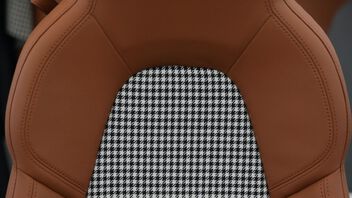
    The interior is equally as special as the exterior with materials meant to call back the 1960s and early 1970s including seat centers and door panels with Pepita cloth upholstery. The standard interior of this model uses semi-aniline leather in black and Classic Cognac. This is the first time since the 918 Spyder that Porsche has used this particularly supple and natural feeling grade of leather. A single-tone black leather interior is also optionally available.

    Open-pore, dark Paldao wood trim is also standard equipment in this car as a contrast to the light Classic Cognac color. A badge on the passenger side of the dashboard above the glovebox enumerates each example in the 1,250-unit production run.


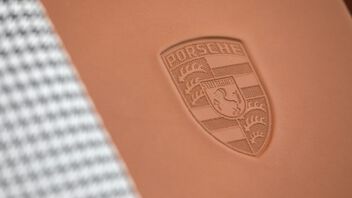
    Little details throughout the interior set this car apart. The central, analog tachometer also provides retro style with a white needle and scale markings alongside green numbers and accents. The Sport Chrono clock in the dashboard gets the same treatment. The center console lid is embossed with the Porsche Exclusive Manufaktur logo, while the headrests are embossed with the Porsche Crest. The door sill plates are also specific to this model, featuring the 911 Sport Classic logo. The sun visors, steering column and even the air vent slats are upholstered in leather. Perforated Race-Tex fabric makes up the headliner and covers the A-, B- and C-Pillars.

    In addition to a owning a limited-edition model, 911 Sport Classic owners become eligible to purchase a unique watch from Porsche Design. The dial on the Chronograph 911 Sport Classic is configurable to match the vehicle. One option is a matte black Heritage Design dial. The green digits and scale markings, and the white hands are based on the tachometer in the vehicle. Alternatively, the watch dial is available with either the Sport Classic stripes in light Sport Grey or Pepita.


    Like the Porsche logo at the rear of the car or the badge in the interior, the Porsche Design logo on the dial is made of gold. There is more gold-coloured lettering on the seconds dial, which reads “911 Sport Classic Lim. Series.”


    The design of the winding rotor draws inspiration from the wheels of the vehicle, and includes a cover that looks like the center-lock nut. It also bears the classic Porsche crest. The two wristbands included in the set – one in Black, one in Classic Cognac – also draw parallels with the vehicle. They are made from the same leather as the upholstery in the vehicle interior and feature an embossed “911.”


    Technical highlights of the Chronograph 911 Sport Classic:

    • Two-tone housing made of lightweight, durable titanium

    • Werk 01.200 Porsche Design mechanical chronograph calibre

    • Certified by the COSC (Contrôle Officiel Suisse des Chronomètres – the official Swiss chronometer testing institute)

    • With flyback function: start, stop and reset instantly with a single action

    • Sapphire crystal with a hard coating and sevenfold anti-glare properties

    • Ability to switch wristbands with the quick-change system

    Like all watches by Porsche Design, this special model is produced at the

    dedicated Porsche watch factory in Solothurn, Switzerland.

    The 911 Sport Classic will be available in the United States as part of the 2023 model year. Dealer arrival is expected in late 2022. Pricing information will be announced closer to market arrival.


    Copyright Porsche AG

    Hello Rxxx and Axxx,


    nice to hear from you again.


    The topic of #increasing the #performance of 991.1. is quite complex. The question is, what should
    the #car be able to do, what it cannot do, what is the #budget, where should the car go and against
    whom should the car be able to #compete. On which #circuits is the car primarily moved?


    We have a large portfolio that we can offer our customers in-house, covering many options from
    #gearbox #changes, clutches, special chassis modifications, to engine performance upgrades.


    Almost everything, however, are things that we only do in-house, there are almost no items that we
    sell. Most of the time, everything is a #package consisting of service and material and components
    #converted by us, which we have manufactured for us.


    It ranges from simple increases in performance in the area of increased displacement from 3.8 liters
    to 4.0, 4.1 and 4.3 liters in performance ranges up to approx. 600 hp. It is similarly extensive for
    #transmissions and chassis.


    For example, we have our own #gear #wheels made to optimize the shift points for different race tracks.


    We use our own #intake #systems, #camshafts, intake #manifolds, #exhaust systems made of Inconel or
    #stainless #steel, large #throttle #valves, cylinders, pistons, engine water tanks, modified crankcases, oil
    pumps, special #crankshafts, special #connecting rods, titanium valves, cylinder heads with special
    channels, and many other items .


    As you can see, the question of performance increases is not easy for me to answer. It is always a
    question of what is needed for which #application.


    Removing the catalytic converter brings exactly "NOTHING" in terms of additional performance!


    The simplest variants are e.g. displacement extensions to 4.0 liters, #camshafts, #connecting #rods
    and around 520 hp with 102 octane are available.


    In addition, a special setup, shocks, a short-shifted gearbox with changes to the 4.-5-.6. gears and
    the car can only be beaten on short courses by professionals with the same model.


    Did you think of something like that? Or rather increases in speed up to 9,500 rpm with titanium
    components and around 580 - 600 hp in output?


    If there's anything I can do, let me know.


    Kind regards

    Jürgen Albert

    Rund ein halbes Jahr vor dem Start der Fußball-Weltmeisterschaft in Katar ist Hansi Flick zu Gast im 9:11 Podcast. Der Trainer der deutschen Fußballnationalmannschaft spricht in der neuen Folge über das Zusammenspiel von individuellen Stärken, Teamgeist und Führungsqualitäten – im Sport und im Unternehmen.

    Quelle: https://newsroom.porsche.com/d…st-hansi-flick-28177.html

    Presse-Information28. April 2022
    Testlauf im Porsche Experience Center Hockenheimring

    Markenerlebniszentrum pilotiert erneuerbare Kraftstoffe


    Stuttgart. Ab sofort fährt die Sportwagenflotte am Porsche Experience Center Hockenheimring mit einer Kraftstoff-Mischung, die zum größten Teil auf Nahrungsmittel-Abfallprodukten basiert. Für das Pilotprojekt werden 1.600 Liter des erneuerbaren Benzins für die Fahrprogramme des Markenerlebniszentrums genutzt.

    „Nach dem erfolgreichen Einsatz im Motorsport wollen wir mit dem Pilotprojekt in unserem Porsche Experience Center die Leistungsfähigkeit der Biokraftstoff-Mischung in einem fahrdynamischen Umfeld demonstrieren“, sagt Bastian Schramm, Leiter Marketing der Porsche Deutschland GmbH. „Der Einsatz von erneuerbaren Kraftstoffen im täglichen Betrieb kann auch ein Beitrag dazu sein, die CO2-Emissionen unserer Sportwagenflotte bei den Fahrprogrammen zu senken.“

    Der eingesetzte Biokraftstoff aus Nahrungsmittel-Abfallprodukten wird durch die Beimischung weiterer, herkömmlicher Kraftstoffanteile ein Super E10-Kraftstoff mit 98 Oktan. Dieses Benzin erfüllt dadurch die geforderten Eigenschaften in Bezug auf Klopffestigkeit und Brennverhalten. Die Eignung für den Einsatz in Porsche-Hochleistungsmotoren hat dieser Kraftstoff bereits im Porsche Mobil 1 Supercup bewiesen, wo die 911 GT3 Cup-Rennwagen aller Teams bei jedem Rennen der Saison 2021 damit betankt waren. Zuletzt präsentierte Porsche den Kraftstoff in dem 718 Cayman GT4 RS bei dem diesjährigen GP Ice Race in Zell am See.

    Fahrdynamische Erlebnisse im Herzen des Hockenheimrings
    Seit der Eröffnung im Oktober 2019 begeistert das Porsche Experience Center Hockenheimring Kunden und Fans der Marke mit Gänsehaut-Momenten. Es liegt rund 100 Kilometer vom Stammsitz in Stuttgart-Zuffenhausen entfernt und bietet ein Kundenerlebniszentrum mit Fahrzeugausstellung, eine Handlingstrecke, Fahrdynamikflächen sowie einen Offroad-Parcours. Für die vielseitigen fahrdynamischen Erlebnisse an der Seite von erfahrenen Instrukteuren können Besucher ihren eigenen Porsche nutzen oder auf die umfangreiche Sportwagenflotte des Porsche Experience Centers zurückgreifen. Neben dem Angebot der Fahrprogramme und Gastronomie lädt der Standort im Herzen des Hockenheimrings auch 2022 wieder zur „Frühschicht“ ein, einem monatlichen Fahrzeugtreffen von Porsche-Liebhabern. Weitere Informationen zum Porsche Experience Center Hockenheimring und den Fahrprogrammen sind verfügbar unter: www.porsche-experiencecenter-hockenheimring.de


    Weitere Informationen sowie Film- und Foto-Material im Porsche Newsroom: newsroom.porsche.de

    Porsche Deutschland GmbH
    Öffentlichkeitsarbeit & Presse
    Florian Steinbuß
    Telefon: +49 (0) 170 911 – 2114
    E-Mail: florian.steinbuss@porsche.de


    Quelle: https://newsroom.porsche.com/d…stoff-mischung-28155.html


    The Porsche customer teams SSR Performance and Team 75 Bernhard will field three 911 GT3 R in the DTM (German Touring Car Masters). This marks the first time that racing cars from the Stuttgart sports car manufacturer contest all 16 races on eight weekends. The 2022 season kicks off this coming weekend with a doubleheader event in Portimão. The teams and drivers prepared for the opening round in Portugal with extensive tests at Hockenheim and on the 4.653-kilometre Autódromo Internacional do Algarve. Following tradition, the season wraps up in early October on the Hockenheimring, around 100 kilometres south of Frankfurt.


    The DTM-Calendar 2022


    All the details: newsroom.porsche.com // article: Porsche customer teams contest a full DTM season for the first time

    #Porsche #PorscheNews #PorscheNewsroom #911GT3R #DTM#Portimao #SSRPerformance #Team75Bernhard #Motorsport#Motorsports #Racing #RacingIsLife #PorscheRaces#PorscheMotorsport #PorscheLife #PorschePix #SportsCar#SportsCars #RaceCar

    Porsche-Kundenteams starten erstmals in eine komplette DTM-Saison


    Stuttgart. Die #Porsche-Kundenteams SSR Performance und Team 75 #Bernhard setzen in der DTM (#Deutsche #Tourenwagen #Masters) drei 911 GT3 R ein. Damit werden erstmals #Rennfahrzeuge des #Stuttgarter #Sportwagenherstellers bei allen acht Events mit insgesamt 16 Wertungsläufen eingesetzt.


    Der #Auftakt findet am kommenden #Wochenende mit zwei Rennen in Portimão statt. Bei umfangreichen #Testfahrten in #Hockenheim und auf dem 4,653 Kilometer langen Autódromo Internacional do Algarve haben sich die Teams und Fahrer auf den Auftakt in #Portugal vorbereitet. Die Saison endet dann traditionell Anfang #Oktober auf dem #Hockenheimring, rund 100 Kilometer südlich von Frankfurt.


    „Für Porsche öffnet sich mit der DTM ein ganz neues #Kundensport-Kapitel“, erläutert Sebastian Golz, #Projektleiter 911 GT3 R. „In der #DTM lautet das Motto: Fahrer gegen Fahrer. Die Abstimmung der Autos ist individuell auf einen Piloten maßgeschneidert, es gibt keinerlei #Kompromisse. Die #Boxenstopps mit schnellem #Radwechsel können Rennen entscheiden – sie sind somit elementarer Bestandteil des #Wettbewerbs zwischen den Teams. Wir freuen uns zusammen mit unseren Kundenteams sehr auf diese Herausforderung.“


    Im Gegensatz zu anderen Serien mit #Rennwagen nach dem FIA GT3-Reglement gilt in der DTM: ein Auto, ein Fahrer. Porsche unterstützt die #Partnerteams #SSR #Performance und Team 75 #Bernhard mit einem #Teileservice, #Beratung durch #Performance-Ingenieure und dem Einsatz von #Werkspiloten sowie Fahrern aus dem erweiterten Porsche-Kader.


    Die Kundenteams und Fahrer

    Das Team SSR Performance aus München steigt nach Titelgewinnen im ADAC GT Masters zur Saison 2022 in die DTM ein. Die Mannschaft um Stefan Schlund schickt zwei der über 500 PS starken Porsche 911 GT3 R ins Rennen. In der Startnummer 92 geht Werksfahrer Laurens Vanthoor aus Belgien in den Wettbewerb, im Schwesterauto mit der Nummer 94 agiert der Norweger Dennis Olsen. SSR Performance hatte in der vergangenen Saison bereits einen Gaststart in der DTM absolviert. Das Team 75 Bernhard kommt ebenfalls aus dem ADAC GT Masters. Die Mannschaft von Porsche-Markenbotschafter Timo Bernhard setzt in der Startnummer 24 auf die Dienste des Werksfahrers Thomas Preining aus Österreich. Der 23-Jährige kennt das rheinland-pfälzische Team bereits von seinen Einsätzen 2021 im GT Masters.


    Das ist die DTM

    Die DTM startete im Jahr 2000 unter dem Titel „Deutsche Tourenwagen Masters“ neu durch und erarbeitete sich als Folgeserie der ursprünglichen DTM/ITC (1984 bis 1996) viele Fans. Bis 2020 wurden reine Prototypen eingesetzt, seit dem vergangenen Jahr wird mit Autos nach dem FIA GT3-Reglement gefahren. Dieser Schritt ermöglicht den Start des erfolgreichen Porsche 911 GT3 R in der DTM. Das ausgereifte Rennfahrzeug aus Weissach hat seine Qualitäten unter anderem durch Titelgewinne und Siege in der Intercontinental GT Challenge, der nordamerikanischen IMSA WeatherTech SportsCar Championship und dem ADAC GT Masters sowie bei den 24-Stunden-Rennen auf dem Nürburgring, in Spa-Francorchamps und in Daytona eindrucksvoll dargestellt.


    Die DTM 2022 umfasst acht Veranstaltungen in fünf europäischen Ländern. An jedem Rennwochenende werden zwei Freie Trainings (40 bis 45 Minuten), zwei Qualifikationen (je 20 Minuten) und zwei Wertungsläufe über jeweils 55 Minuten plus eine Runde ausgetragen. In allen Rennen ist ein Boxenstopp mit Reifenwechsel Pflicht. Die zehn besten Fahrer, Teams und Hersteller erhalten Punkte nach dem bewährten FIA-Schema (25-18-15-12-10-8-6-4-2-1). Zusätzliche Punkte gibt es für die drei Erstplatzierten in den Qualifyings sowie für die schnellste Rennrunde. Am Ende der Saison kürt die DTM ihre Meister in den Kategorien Fahrer, Team und Hersteller. Für die Saison 2022 haben sich insgesamt 29 Piloten in GT3-Fahrzeugen von fünf verschiedenen Marken eingeschrieben. Eine Balance of Performance (BoP) bringt die verschiedenen Rennwagen-Modelle auf ein gemeinsames Leistungsniveau, um einen spannenden und offenen Wettbewerb zu ermöglichen. Der Free-TV-Sender ProSieben zeigt alle Rennen live, einen kostenfreien Stream bietet servustv.com an.


    Der DTM-Kalender 2022

    29.04. – 01.05. #Portimao (Portugal)

    20.05. – 22.05. #Lausitzring (Deutschland)

    17.06. – 19.06. #Imola (Italien)

    01.07. – 03.07. #Norisring (Deutschland)

    26.08. – 28.08. #Nürburgring (Deutschland)

    09.09. – 11.09. #Spa-Francorchamps (Belgien)

    23.09. – 25.09. #Spielberg (Österreich)

    07.10. – 09.10. #Hockenheim (Deutschland)


    Stimmen vor dem Saisonstart


    Timo Bernhard (Besitzer Team 75 Bernhard): „Wir wollen konkurrenzfähig sein, um die Top 5 kämpfen mit Zug zum Podium. Wenn uns dies gelingt, dann bin ich zufrieden. Es wird schwierig, aber nicht unmöglich. Wir sind als Team gut aufgestellt und haben unseren Wunschkandidaten im Auto. Ich bin überzeugt, dass Thomas Preining alles mitbringt, was ein Fahrer in der DTM benötigt. Er kann den Porsche 911 GT3 R optimal für seine Bedürfnisse einstellen und im Zweikampf die Ellenbogen gut ausfahren – er ist ein toller Racer. Hinzu kommen schieres Tempo und jugendliche Leichtigkeit. Er wird bestimmt viele Zuschauer und Gegner überraschen.“


    Thomas Preining (Porsche 911 GT3 R #24): „In der DTM hat jeder Fahrer ein Auto für sich. Ich kann das Setup voll und ganz auf mich auslegen, muss keinerlei Kompromisse eingehen. Der Pilot steht im Mittelpunkt und zieht die Aufmerksamkeit auf sich. Das hat Vor- und Nachteile. Wenn du in anderen Serien einen starken Teamkollegen hast, treiben sich beide Fahrer gegenseitig nach vorn. Auch das ist gut. Ich erwarte in der neuen DTM-Saison ein fahrerisch enges Feld, das seinesgleichen sucht. Es wird die vielleicht beste GT-Serie weltweit sein. Prognosen bezüglich der Resultate sind kaum möglich. Wir wollen gewinnen – das ist logisch. Ob uns das gelingen wird, sehen wir bald.“


    Stefan Schlund (Besitzer SSR Performance): „Wir sind sehr gespannt auf unsere erste volle DTM-Saison. Im Team muss sich möglichst schnell alles einspielen. Wir haben unsere Mannschaft erweitert, gehen nun mit 22 Mitarbeitern in die DTM. Die Zusammenarbeit wird immer besser und reibungsloser. SSR Performance soll ganz vorne mitfahren. Das ist unser Anspruch. Wir haben zwei erfahrene und schnelle Fahrer in unseren Autos. Beide wissen ganz genau, was sie tun und kennen den Porsche 911 GT3 R aus dem Effeff. Im Gegensatz zu anderen GT3- und Langstreckenserien müssen sich die beiden das Auto nicht mit anderen Fahrern teilen. Es kommt allein auf die eigene Leistung an. Vor diesem Hintergrund wollen Laurens und Dennis deutliche Zeichen setzen.“


    Laurens Vanthoor (Porsche 911 GT3 R #92): „Alles ist neu, denn der Porsche 911 GT3 R, unser Team SSR Performance und ich als Fahrer betreten in der DTM echtes Neuland. Es wird eine große Herausforderung, denn unsere Mitbewerber kennen die Serie zum Teil seit vielen Jahren und haben einen Erfahrungsvorsprung. Dennoch bin ich zuversichtlich. Wir konnten uns bei Testfahrten konsequent vorbereiten. Ich freue mich sehr auf das erste Rennwochenende in Portimão. Die Strecke in Portugal ist abwechslungsreich, die Umgebung an der Algarve sehr schön. Ich hoffe, dass wir gleich zum Saisonstart ein Highlight setzen können.“


    Dennis Olsen (Porsche 911 GT3 R #94): „Ich werde einer der allerersten Porsche-Fahrer in der DTM und zudem der erste Norweger in der Serie sein – ich schreibe also etwas Rennsport-Geschichte, das ist wunderschön. Wir haben uns bestmöglich auf alles vorbereitet, was in dieser Saison auf uns zukommen kann: strukturell im Team, Abläufe auf und abseits der Strecke, Optimierung der Boxenstopps. Ich denke, dass wir starke Wochenenden haben werden, aber auch welche, an denen es mal nicht so gut läuft. Wir müssen jederzeit das Maximum herausholen und konstant punkten. In Portimão wird alles neu für uns sein, aber wir haben die Tests genutzt, um vor Überraschungen bewahrt zu bleiben. Ich wünsche mir, gleich am ersten Wochenende ganz vorn dabei zu sein.“


    Weitere Informationen sowie Film- und Foto-Material im Porsche Newsroom: newsroom.porsche.de


    Auf dem Twitter-Kanal @PorscheRaces erhalten Sie aktuelle Informationen
    und Fotos zum Porsche Motorsport live von den Rennstrecken in aller Welt.


    Info:
    Öffentlichkeitsarbeit, Presse, Nachhaltigkeit und Politik

    Event- und Sport­kommunikation

    Holger Eckhardt

    Telefon: +49 (0) 711 / 911 24959

    E-Mail: holger.eckhardt@porsche.de


    50 Jahre #Porsche #Design bedeuten fünf #Jahrzehnte voller #Leidenschaft, #Innovationen und #Ikonen. Zum #Jubiläum blicken wir nicht nur stolz auf unsere #Geschichte zurück, sondern erwecken sie mit der #50Y #Anniversary #Collection zu neuem #Leben. Seien Sie gespannt auf ein Jahr voller interessanter #Einblicke, exklusiver #Events und limitierter #Produkte – und lassen Sie sich vom nächsten Kapitel unserer Geschichte inspirieren.


    Auf der Porsche Design Webseite der Marke finden Sie interessante Artikel aus den Bereichen:
    #Fashion und #Sport, #Uhren, #Brillen, #Taschen, #Gepäck, #Electronics, #Accessoires, #Sale.


    Liebe Grüße
    Jürgen Albert


    Copyright: Porsche Design

    Over the past financial year, Porsche AG has underpinned its position as one of the world’s most profitable automobile manufacturers. The Stuttgart-based sports car manufacturer reached a new all-time high in both sales revenue and operating profit.


    Last year, almost 40 percent of all new #Porsche vehicles delivered in #Europe were already at least partly #electric – i.e. plug-in #hybrids or fully electric models.


    In addition, Porsche had announced its intention to be #carbon-neutral on the balance sheet in 2030. “In 2025, half of all new Porsche sales are expected to come from the sale of electric vehicles – i.e. all-electric or plug-in hybrid,” announced Oliver Blume. “In 2030, the share of all new vehicles with an all-electric drive should be more than 80 percent.”


    To achieve these ambitious goals, Porsche is investing in premium charging stations together with partners – and additionally in its own charging infrastructure. Further extensive investments are flowing into core technologies such as battery systems and module production. In the newly founded #Cellforce #Group, #high-performance #battery cells are being developed and produced that are expected to be ready for series production by 2024.


    In 2021, Porsche delivered 301,915 vehicles to customers worldwide. This means that the 300,000 mark was exceeded for the first time in the company’s history (previous year: 272,162 deliveries). The bestselling models were the Macan (88,362) and the Cayenne (83,071). Delivery figures for the Taycan more than doubled: 41,296 customers took delivery of the first all-electric Porsche. This even overtook the iconic 911 sports car, although the latter also set a new record with 38,464 units.


    “The #Taycan is 100 percent a Porsche and inspires all kinds of people – existing and new customers, experts and the trade media. We are stepping up our electric offensive with another model: By the middle of the decade, we want to offer our mid-engine #718 sports car exclusively in an all-electric form,” Said #Oliver #Blume.


    Source / Photo: Porsche


    Best regards

    Jürgen Albert


    Porsche 911 GT3 (2022) HOW IT'S MADE? – Porsche Exclusive Manufaktur


    It is no small feat to craft a 911 –1,500 workers touch each car during its two-day long assembly that starts with a shell and finishes by rolling off a line. Now, for the first time, a time lapse video shows the entire process, focusing on a very special 911 GT3, part of the Paint to Sample program.


    With dozens of individual options to choose from, the range of possible combinations means seeing a pair of identical 911s is particularly rare. Color choice plays a large role in the customization.


    To meet increasing demand and improve ease of access for customers, the popular Paint to Sample program offered through Porsche Exclusive Manufaktur was updated in late 2021 to expand its capacity. The significant long-term investment from Porsche highlights the marque’s commitment to building anyone’s dream car. Including standard offerings on each model line, more than 160 pre-approved paint options are now available in the current catalog.


    In detail: creating a Paint to Sample Porsche


    Prior to its 117-stage assembly, the 911 chassis has spent more than a day going through preparation in the body and paint shop. One of the challenges of painting vehicles and developing paint finishes is working with the material mix of the underlying components. A vehicle body already consists of several different steel and aluminum materials and can also include carbon fiber or polypropylene. Paint batches must suit all exterior features equally and produce the same color.


    Before entering the paint shop, the body is degreased, given a phosphate coat and put through an electro-chemical process chiefly used for corrosion protection. During the coating process, the body is dipped into a basin, which is filled with electrophoretic dip paint and deionized water. To achieve optimal coverage of the body, it is rotated around its own axis in the basin.


    From here a primer, base coat and clear coat are applied to the body and panels, with a standard color using about 4 liters of liquid application between the three stages.


    Primers are chosen based on final color; light colors require light primers, dark colors need dark primer. The base coat is the colored layer which delivers the requested hue and is only up to 30 micrometers thick. To put that into comparison, a standard piece of printer paper is around 100 micrometers.


    The car’s final layer, the clear coat, is its thickest and is sprayed between 30 to 50 micrometers, illustrating just how thin the individual paint coats are. The painted car is then dried at a maximum temperature of 392˚ Fahrenheit (200˚Celcius) for more than two and a half hours.

    “A lot of customers want to underline their personality with their car and bring their flavor into the car concept,” said Apenbrink. “Nothing underlines personality as well as the car color because this is what tells the story.”


    Standard, metallic and special colors are specifically defined in advance for each model line in the series and, in some cases, even for each derivative for each model year. The quantity of colors offered is determined by the number of storage tanks and paint supply lines within the paint shops at the production plants. For this reason, no more than 17 standard exterior colors can be offered from a purely technical standpoint for the 911.


    With Paint to Sample, more than 100 additional pre-approved colors beyond the standard offering are available from the factory on a new 911 or 718. The Taycan, Cayenne, Panamera and Macan have more than 50 additional choices available. New hues can be considered as well via the Paint to Sample Plus program if a customer wants to take it a step further, a process that can color match almost any request as long as it passes a rigid feasibility test.


    Paint to Sample Plus is currently only available on vehicles produced in Zuffenhausen – 911, 718, Taycan – and color development alone takes at least five months. Paint to Sample Plus offers the option for customers to permanently add another color to the Porsche color range.


    All customers who request a color for the first time and pay the additional price for the color development can consider themselves the creator of this color. The customer and color are recorded in the Porsche Color Database, and the color is added to the pre-approved options in the Paint to Sample program as quickly as possible so others may also order the newly created paint color.


    “You are building a bespoke car with individual craftsmanship processes behind it,” says Apenbrink. “You can have your bespoke color.”


    The final customer

    Leh Keen has done just about everything you can in a Porsche.

    The professional racer takes part in the Porsche Carrera Cup North America one-make series with the 311RS Motorsport team, broke an indoor land speed world record in a Taycan Turbo S, and has built dozens of off-road spec 911 sports cars for fellow thrill seekers through The Keen Project.


    Until last year, however, he had never ordered a new Porsche from the factory for himself. Keen knew for his 2022 911 GT3 he’d be leaning heavily on the Paint to Sample options.


    “It’s one of my favorite things, I’m obsessed with the different colors,” said Keen. “All these amazing colors that Porsche has done over the years. We really dig deep in the history of Porsche.”


    “I wanted to have this newest, modern 911 but then coated with a very classic old color,” said Keen of the decision. “I told a few people I was going to go gold. People thought it was risky, and it really reinforced my choice and I wanted to see how it would turn out. I think a lot of people couldn’t quite picture the gold in their head.”


    Remembers Keen: “At the dealership when they pulled the cover off of it, I was kind of stunned over how beautiful it was.”


    Source / Photos: Porsche


    Best regards

    Jürgen Albert