

What are the red blocking warning lights on the dash of a 991 Cup for?
Dear All,
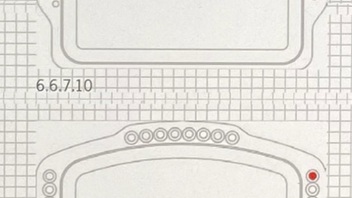
Due to current events and as guidance for our Italian customer Igor, here is an explanation regarding the two red warning lights on the left and right of the dashboard in a Porsche 991 GT3 Cup race car.
 991 Cup Cars Without ABS
The locking warning light in the dashboard of a 991 GT3 Cup race car is an indicator that one or more wheels are at risk of locking under braking.
Since the 991 GT3 Cup does not have ABS, hard braking can cause the tires to lock up, especially on cold or uneven surfaces.
The locking warning helps the driver modulate brake pressure accordingly to avoid flat-spotting the tires or losing control.
Typically, this warning is triggered by sensors monitoring wheel speeds. If one wheel spins significantly slower than the others or stops completely, the system detects a risk of locking and alerts the driver.
- Left Side: If the front brake pressure is at least 10 bar and the left front wheel speed is at least 20 km/h lower than the left rear wheel, the upper left warning light will illuminate.
- Right Side: If the front brake pressure is at least 10 bar and the right front wheel speed is at least 20 km/h lower than the right rear wheel, the upper right warning light will illuminate.
991 Cup Cars With ABS
If the 991 GT3 Cup is equipped with ABS (e.g., via a retrofit ABS kit allowed in some racing series), the locking warning functions slightly differently.
In this case, the warning indicates that ABS is intervening because one or more wheels have reached the locking threshold. This helps the driver optimize braking behavior, such as by modulating pressure more smoothly or adjusting brake force.
If the locking warning appears too frequently or too intensely, it could indicate:
- Incorrect ABS setup
- Imbalance in brake force distribution
- Tire issues (e.g., incorrect pressure or worn tires)
The locking warning in the 991 GT3 Cup typically illuminates when braking force on one or more wheels is high enough that the wheel is close to locking up.
Typical Pressure Values for the Warning:
- Without ABS: The light illuminates when a significant imbalance in wheel speeds is detected, meaning a wheel is decelerating sharply or locking up. Exact brake pressure varies based on tire condition, track grip, and setup but is often around 80–100 bar or more on the front axle.
- With ABS: If the car has ABS, the warning appears when the ABS system actively intervenes. This means brake pressure is strongly reduced or modulated on one or more wheels to prevent locking. Depending on the ABS characteristics, this can happen at 110–160 bar (or even higher) on the front axle.
What Does This Mean for the Driver?
- Without ABS: The warning is a direct indication that you need to adjust braking force to avoid flat-spotting the tires.
- With ABS: The light indicates that ABS is actively regulating—this may suggest you are braking too aggressively or that the setup (brake balance, tire pressure) needs optimization.
 How to Minimize the Locking Warning and Optimize Braking Performance:
1. Adjust Brake Balance (Brake Bias)
Brake balance controls the distribution of braking force between the front and rear axles.
- Too much front brake bias → Front wheels lock up more easily.
- Too much rear brake bias → Rear end becomes unstable.
🔧 Optimization Recommendations:
- If the front locking warning appears frequently, shift the brake bias slightly rearward (e.g., from 53:47 to 51:49).
- If the rear becomes unstable, carefully adjust forward again.
- Tip: Always test balance adjustments in small increments!
2. Monitor Tire Pressure & Temperature
Incorrect tire pressure or cold tires can increase the risk of locking.
- Too low pressure: Tires flex more, contact patch changes.
- Too high pressure: Less grip, as the tire does not sit optimally.
🔧 Optimization Recommendations:
- Monitor both cold & hot tire pressures (e.g., hot pressures: front 1.8–2.1 bar, rear 2.0–2.2 bar).
- Warning: These values are not an official recommendation!
- If the warning frequently appears, adjust tire pressures and analyze driving data.
- Tip: Follow the Pirelli or Michelin recommendations for your Cup tires!
(Your tire dealer or the respective brand’s technical support can provide these values.)
3. Fine-Tune ABS Setup (If Present)
The ABS regulation behavior can be adjusted depending on the version and race series.
- Too aggressive intervention: ABS activates too early, reducing performance.
- Too late intervention: Increased risk of wheel lockup.
🔧 Optimization Recommendations:
- If the locking warning appears frequently, a more sensitive ABS setup may help.
- If ABS intervenes too strongly, a different setting may improve brake feel.
- Pro Tip: Porsche offers different ABS maps depending on the racing series—consulting with engineers or data analysis is advisable.
- Semi-Pro Tip: Adjust the ABS rotary dials and test progressively during a track day.
💡 Albert Motorsport Customers: We configure your ABS system based on race-proven settings developed in competition.
4. Adapt Driving Style
Sometimes, it’s not just the setup but also braking technique and modulation.
- Too aggressive braking → Higher risk of wheel lockup.
- Use a progressive braking technique → Apply pressure quickly but not abruptly.
🔧 Optimization Recommendations:
- If you frequently see the locking warning, try applying brake pressure more smoothly and easing off slightly when turning in.
- Data analysis: Compare your brake pressures with professional data to identify areas for improvement.
Conclusion:
- ✅ Adjust brake balance (fine-tune front/rear bias).
- ✅ Check tire pressure & temperature (find the optimal range).
- ✅ Optimize ABS setup (if available, fine-tune sensitivity).
- ✅ Analyze & refine braking technique (progressive pressure build-up).
🔍 Do you have data logging from the car?
This would allow for even more precise analysis of the issue! 😊
If you have any questions, feel free to reach out.